
Carbon is the fourth most prevalent chemical element in the observable universe by mass, after hydrogen, helium, and oxygen. It is the foundation for all life on Earth. Carbon is found abundantly in the sun, stars, comets, and the atmospheres of most planets. This element is also present in our atmosphere in the form of carbon dioxide (CO₂). Carbon helps regulate the Earth’s temperature, enables life to exist, is an essential component of the food we consume, and provides a major source of energy that powers our global economy.
On Earth, carbon is stored in rocks and sediments, while the remaining portion is found in the ocean, atmosphere, and living organisms. Given that the ocean contains 50 times more carbon than the atmosphere, it plays a critical role in global carbon storage. Carbon can be rapidly transferred between the ocean’s surface waters and the atmosphere, yet deep-sea carbon storage can endure for generations.
Due to its significant role in both climate change and the enhanced greenhouse effect, CO₂ is the most concerning greenhouse gas. To monitor its presence and fluctuations in the atmosphere, scientists have been rigorously studying CO₂ as part of the carbon cycle—a complex series of processes in which the carbon atom moves between various reservoirs.
Over the past 200 years, human activities such as cement production, fossil fuel combustion, and intensive agriculture have led to more than a 35% increase in atmospheric CO₂. However, this rise would have been even greater if the ocean had not absorbed a significant portion of the anthropogenic CO₂. Concerns about the greenhouse effect and global warming have prompted researchers to deepen their understanding of the ocean’s role in the global carbon cycle.
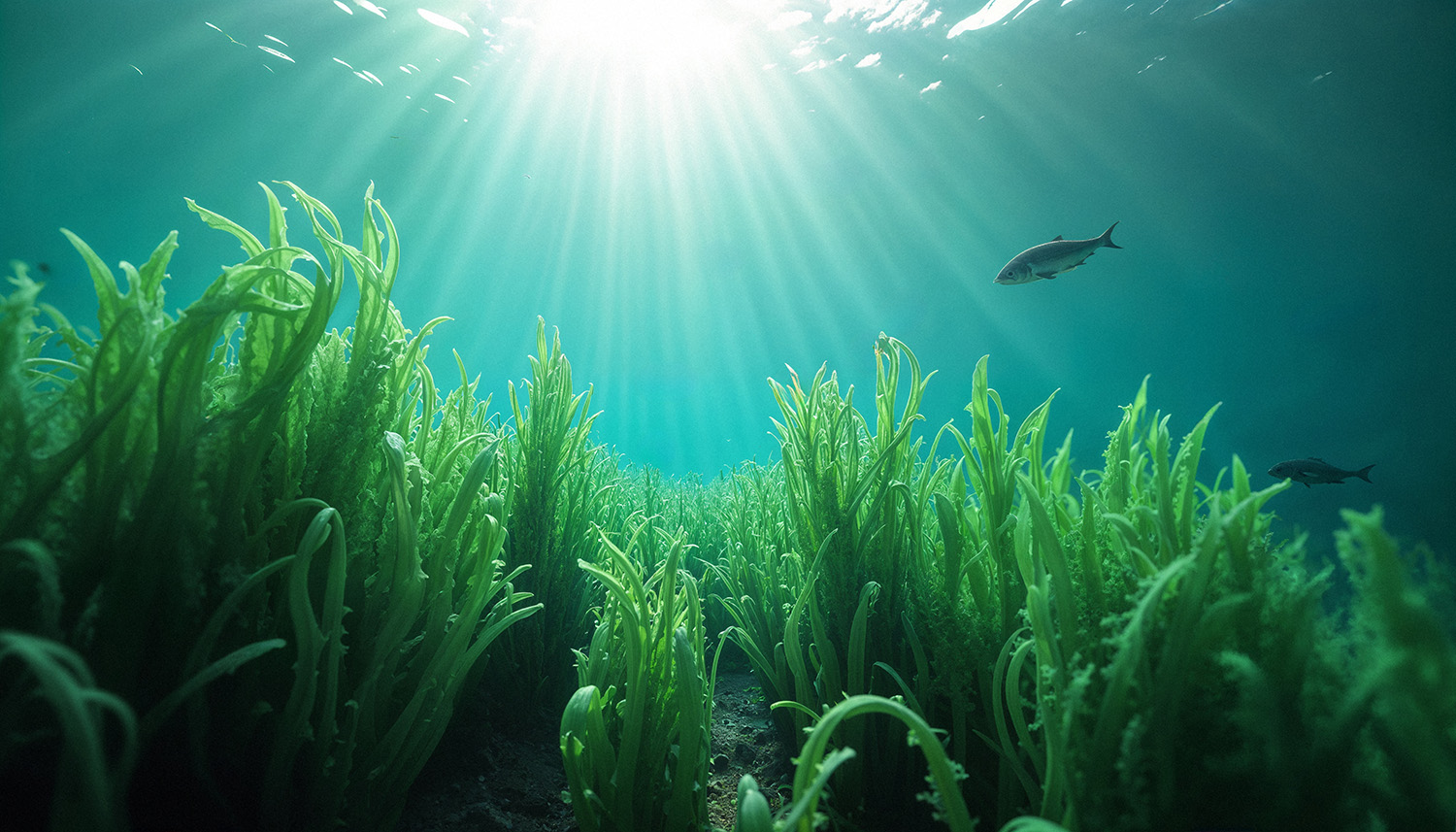
Seaweeds—some of the planet’s fastest-growing organisms—play a key role here. Algae production contributes to greenhouse gas (GHG) reduction in several ways. During growth, algae absorb CO₂ from the atmosphere and convert it into biomass. Through photosynthesis, seaweeds take in atmospheric CO₂ and solar energy, releasing oxygen back into the environment. Much like terrestrial forests, seaweed forests sustain vibrant and diverse ecosystems that provide food, shelter, and oxygen to thousands of marine species, including sea lions, herring, and sea otters. Additionally, towering kelp canopies can increase local pH levels, thus protecting marine life from the harmful effects of ocean acidification.
Seaweed is a powerful and scalable carbon sequestration tool, capable of absorbing more carbon per square kilometer than many forest ecosystems. Most of the CO₂ absorbed by seaweed during photosynthesis is stored in its tissues. While some of this carbon returns to the cycle when consumed or decomposed, a large portion is transported by ocean currents away from the coast. Some of this material sinks and becomes buried in deep-sea sediments—a process that sequesters carbon for thousands of years. According to studies, if just 0.03% of the ocean’s surface were used for seaweed farming, it could potentially remove around 135 million tons of CO₂ from the water annually.
Beyond carbon mitigation, seaweed biomass can be used to produce textiles, bioplastics, organic fertilizers, methane-reducing livestock feed, alternative fuels, and various other low-carbon products. It can also improve soil quality, thus reducing emissions from agricultural lands. Moreover, when used in animal feed, it helps reduce methane emissions from livestock.
Seaweed offers a wide range of ecological services. These include both supporting and regulating functions, which are crucial for climate change mitigation and adaptation. It acts as a natural buffer against extreme weather events that are intensified by climate change. Its underwater forests reduce wave energy and protect coastal zones from erosion, playing a valuable role in natural disaster risk reduction.
Acting as habitat, feeding ground, and nursery, seaweed supports a variety of marine life, including fish, invertebrates, and even seabirds—thereby enhancing marine biodiversity. Additionally, seaweed helps address coastal eutrophication and water pollution by absorbing excess nutrients like nitrogen and phosphorus, which are often responsible for harmful algal blooms. This purification function helps restore biological equilibrium in marine ecosystems.
Economically, seaweed holds an important place in the emerging “blue economy.” Its increasing demand and relatively low production cost make seaweed farming a financially viable and sustainable venture for coastal communities. It supports local livelihoods, promotes food security, and generates employment opportunities. Furthermore, seaweed has already been incorporated into “Blue Carbon” programs in countries such as South Korea to help meet carbon reduction goals. Scaling up global seaweed cultivation could significantly support climate mitigation by replacing high-emission industrial inputs with sustainable biomass.
In summary, seaweed stands at the intersection of ecology, economics, and climate science. Its ability to absorb carbon, protect coastlines, clean water, and support marine biodiversity makes it a vital component in both climate mitigation and adaptation strategies. Expanding seaweed farming presents a scalable, nature-based solution with wide-ranging benefits for the environment and society. As climate threats continue to grow, harnessing the full potential of seaweed could be a key step toward a more sustainable and resilient future.