
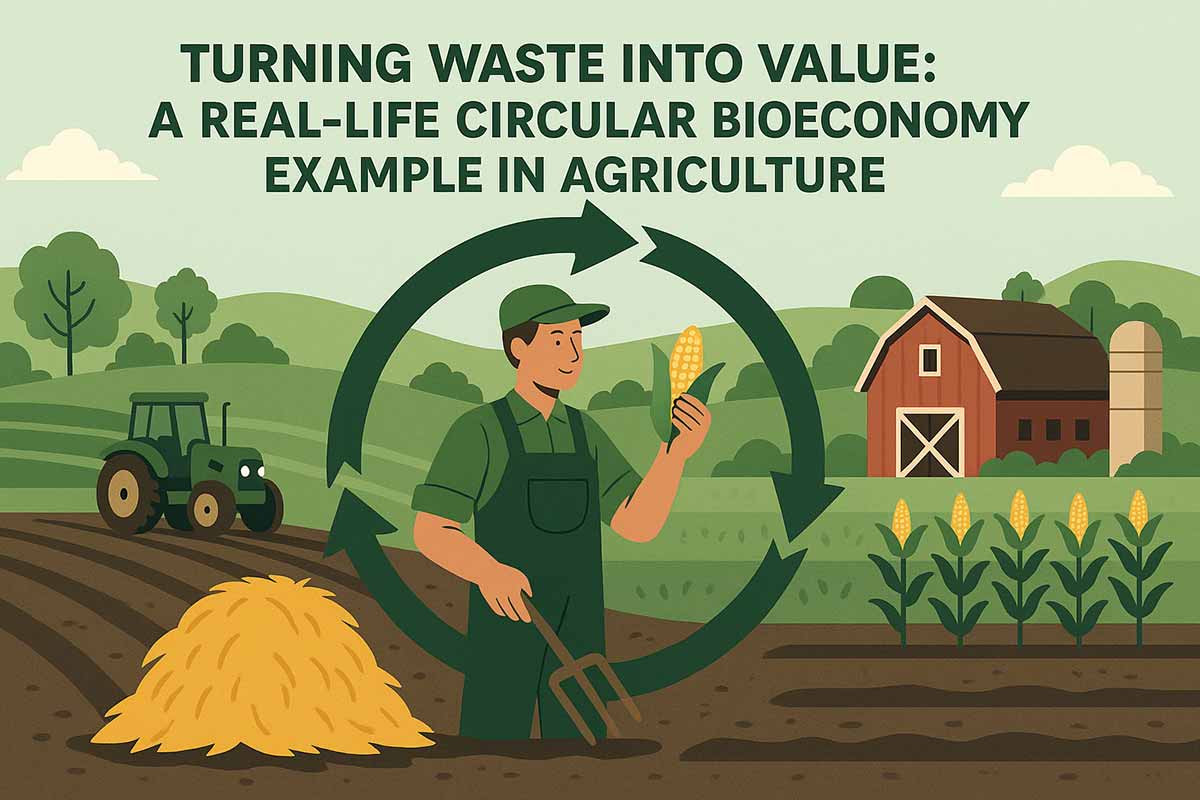
Reframing Waste in Agriculture: A Practical Example of Circular Thinking
The concept of circular bioeconomy is emerging as a vital alternative to linear agricultural systems. Moving away from the conventional “take-make-dispose” model, it offers a regenerative approach: reducing waste, closing loops, and transforming by-products into valuable resources.
Recently, during a consultancy visit to a large-scale agri-food facility in Italy, I witnessed a working example of this in action. Specialising in grape processing and wine production, the facility demonstrated how every output—whether grape pomace, wastewater, or CO₂, can be turned into a productive input for another part of the system. It’s a compelling case of circular thinking applied to real-world agriculture.
What Is Circular Bioeconomy?
Circular bioeconomy combines two frameworks: circular economy and bio-based resource use. It focuses on keeping biological resources—such as crops, animal matter, and microorganisms—within productive use for as long as possible. This means using renewable inputs, recycling outputs, and designing systems that mimic natural cycles.
In agriculture, this could involve composting crop residues, turning livestock waste into biogas, or reclaiming water for irrigation. It’s not just about reducing environmental impact—it’s about managing resources more intelligently and effectively.
Real-Life Example: Zero-Waste Wine Production in Italy
The Italian winery I visited has embedded circular bioeconomy into its operations through several integrated strategies:
- Bioenergy from Grape Pomace
Pomace (the skins, seeds, and stems left after pressing) is not discarded. It’s either dried for biomass fuel or processed via anaerobic digestion to produce biogas—helping power the facility itself. - Water Recycling and Reuse
Wastewater from wine production is filtered and treated, then reused on-site or for irrigating local vineyards. - Utilisation of By-Products
Natural by-products such as tartaric acid and alcohol are collected and sold to the pharmaceutical and cosmetic industries, creating additional revenue streams. - CO₂ Capture and Reuse
Carbon dioxide released during fermentation is captured and reused, often in food and beverage processing. - Composting for Soil Health
Solid organic waste is composted and returned to the land, replenishing the soil and completing the nutrient loop.
These activities are supported by real-time digital monitoring systems that optimise efficiency and provide transparency across every stage of the process.
Why Circular Bioeconomy Matters
This model illustrates the practical advantages of adopting circular strategies in agriculture:
- Environmental Benefits: Reduces emissions and waste while supporting biodiversity.
- Economic Value: Lowers disposal costs and creates income from secondary products.
- Regulatory Readiness: Supports compliance with EU directives on sustainability and environmental reporting.
- Reputational Strength: Builds public trust through visible commitment to responsible practices.
Opportunities for Farmers and SMEs
Importantly, these ideas are not restricted to industrial-scale operations. Smaller farms and SMEs can adopt similar principles:
- Composting: Convert farm residues and organic waste into soil-enriching compost.
- Small-Scale Biogas Units: Produce renewable energy and organic fertiliser.
- Water Reuse: Install basic systems to recover and reuse greywater.
- Cross-Sector Partnerships: Share waste outputs with other industries (e.g. animal feed, compost producers).
Digital technologies—like sensors and tracking software—can make these processes more efficient and measurable. Support from agricultural cooperatives, public institutions, and academic bodies is also critical in scaling these innovations.
From Waste to Resource, from Aspiration to Action
The transition to a circular bioeconomy is not just about reducing harm—it’s about designing systems for long-term resilience and regeneration. Agriculture is uniquely positioned to lead this transition.
The Italian winery shows that circular systems are not just theoretical—they’re already here, delivering both environmental and financial results. With collaboration, knowledge, and investment, these systems can become standard practice.
Let this article prompt the question:
“What am I wasting right now—and how could it become a resource?”
Because when waste gains value, agriculture becomes more robust, communities benefit, and sustainability becomes more than a vision—it becomes the way forward.
About the Author
Pelin Oğur
Founder, Eterna Consulting Community
Pelin is an international sustainability consultant with deep expertise in circular economy, ESG frameworks, and regenerative business models.
Originally published in adapted form on Wikifarmer.