
Breaking the Take-Make-Waste Cycle
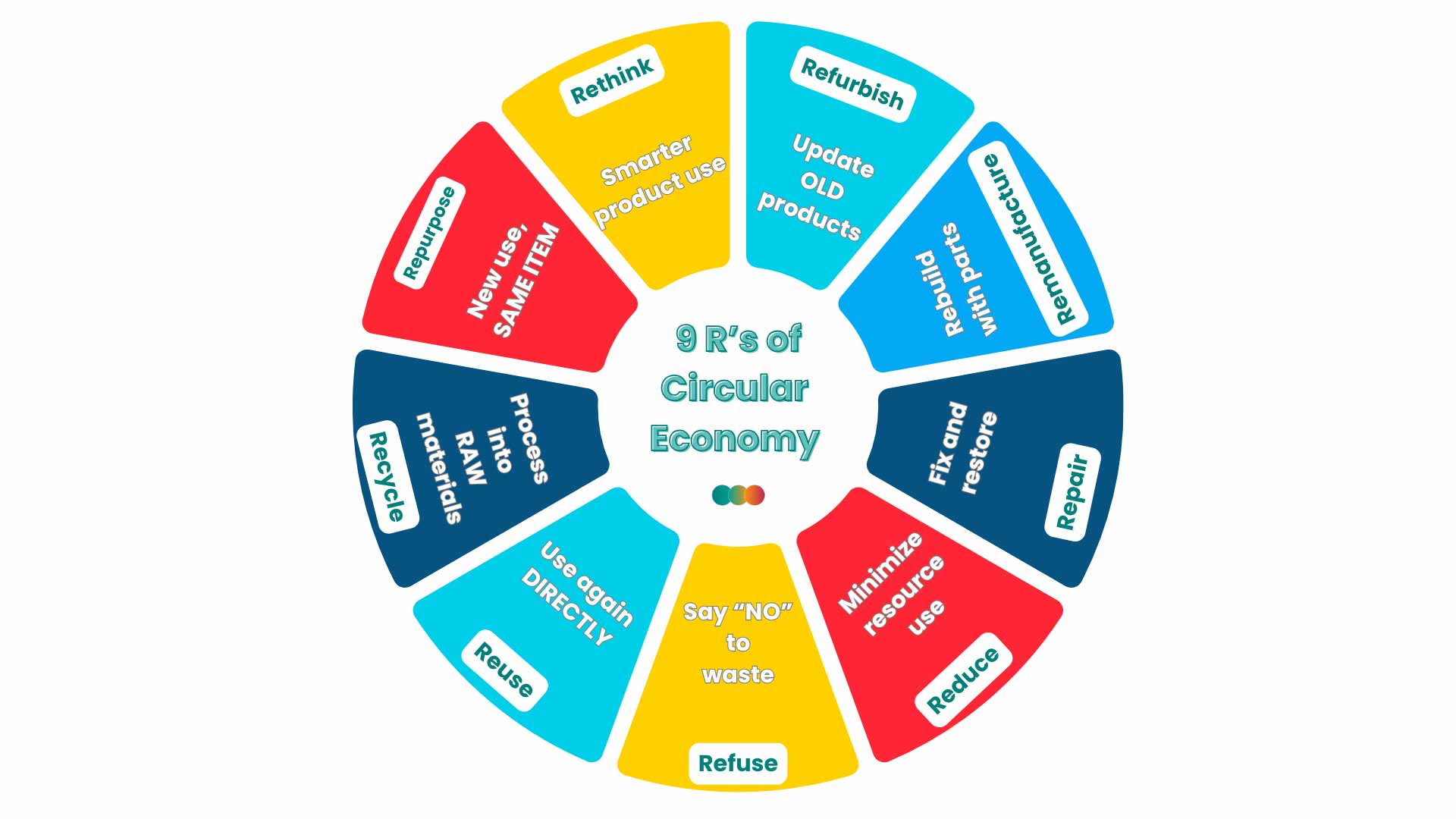
In a world of depleting resources, the circular economy replaces the “take-make-waste” model with a system that maximizes resource efficiency. Its core principles? The 9 R’s: Reduce, Reuse, Repair, Refurbish, Remanufacture, Repurpose, Recycle, Recover, Rethink.
As regulatory pressure increases and global resources face mounting constraints, the 9 R’s framework provides a roadmap for organisations looking to reduce waste, boost efficiency, and strengthen long-term resilience. It is more than an environmental philosophy, it’s a strategic response to stakeholder demands, compliance requirements, and innovation opportunities.
1. Reduce
Minimizing consumption is key:
Using reusable bags instead of plastic,
Opting for energy-efficient appliances.
In a business context:
- Conducting resource-efficiency audits in manufacturing to minimise raw material use
- Designing packaging with minimal environmental footprint
2. Reuse
Extending product lifespans:
Repurposing glass jars as storage containers,
Supporting second-hand markets.
In a business context:
- Implementing reverse logistics to collect and reuse shipping containers or pallets
3. Repair
Extending product lifespans:
Repurposing glass jars as storage containers,
Supporting second-hand markets.
Extending the life of assets:
- Repairing electronics or machinery instead of replacing
- Offering in-house repair services or partnerships with local repair businesses
4. Refurbish
Upgrading old products to modern standards:
Furniture restoration,
Software updates for old smartphones.
In a business context:
- Corporate IT refurbishment schemes that update devices for extended use in-house or donation
5. Remanufacture
Transforming waste into new products:
Refurbished auto parts in the automotive industry.
In a business context:
- Closed-loop systems in industrial production—e.g., remanufacturing engine parts to original standards
6. Repurpose
Creative upcycling:
Turning tires into garden planters,
DIY pallet furniture.
In a business context:
- Repurposing surplus building materials into new construction inputs
7. Recycle
Converting materials into raw resources:
Paper, plastic, and metal recycling programs.
In a business context:
- Internal waste stream separation and recycling programmes in offices and plants
8. Recover
Energy recovery from waste:
Biomass power plants,
Landfill gas-to-energy systems.
In a business context:
- Implementing waste-to-energy systems within industrial operations
- Heat recovery in production facilities
9. Rethink
Redesigning consumption habits:
Sharing economy (e.g., bike-sharing),
“Product-as-a-service” models (e.g., Philips’ lighting services).
In a business context:
- Circular service models (e.g., leasing instead of selling)
- Designing products for disassembly and reusability from the outset
The 9 R’s offer actionable steps for individuals and businesses alike. A sustainable future starts with “less waste, more value”!
Why Businesses Should Embrace the 9 R’s?
Embracing the 9 R’s is not just environmentally responsible, it is commercially sound. Businesses that adopt circular practices see reduced operational costs, improved ESG ratings, and greater resilience to resource volatility. Moreover, it positions them as forward-thinking leaders in their industry, strengthening both reputation and stakeholder trust.
How Eterna Supports Circular Transformation
At Eterna, we help organisations move beyond theory into measurable action. From designing circular business models and conducting resource audits to integrating ESG frameworks and technology systems, we provide tailored support for companies ready to lead in the circular economy.
If your organisation is seeking expert guidance, explore our sustainability consultancy services to discover how we can support your long-term transformation.
Ready to build circularity into your strategy? Contact us to explore how we can help reduce waste, increase value, and design a sustainable future together.